
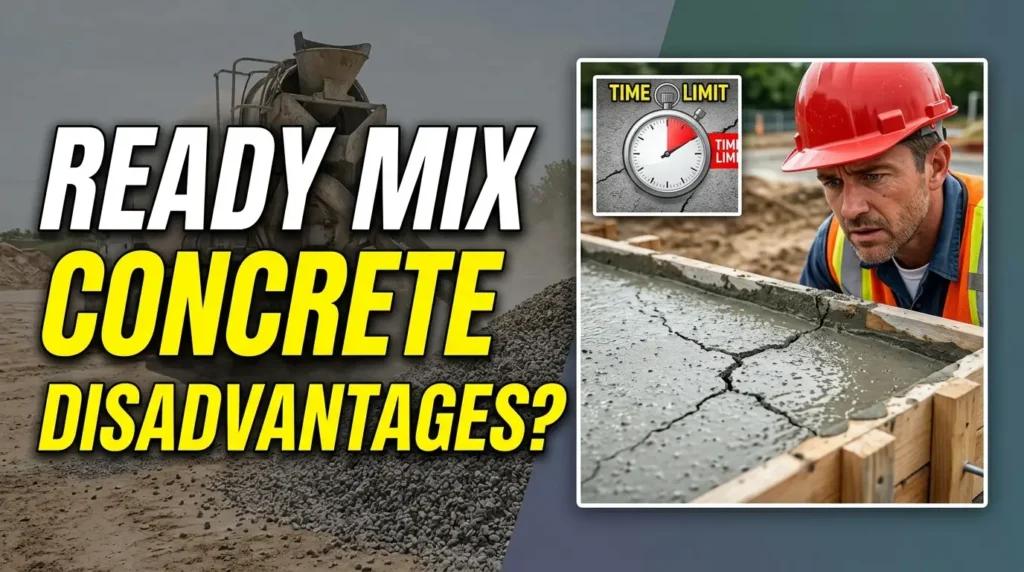
Ready mix concrete has become a popular choice for homes, roads, and commercial buildings. It is produced in a batching plant and delivered to the site in transit mixers. While it saves time and improves consistency, it is not perfect for every project. Understanding the disadvantages of ready mix concrete helps you avoid costly mistakes and choose the right method for your site.
1. Limited Time for Placing
One of the biggest drawbacks is the short window for use. Once water meets cement, the setting time of concrete begins. Ready mix concrete travels from the plant to the site, and every minute counts. If the delivery is late, the mix may start to stiffen before it can be placed and compacted properly.
2. Transportation Problems and Traffic Delays
Transit mixer delivery depends heavily on road conditions. Heavy traffic, narrow lanes, or poor roads can delay the truck. A long journey can cause slump loss, which means the concrete becomes less workable. Workers may then add extra water on site, which weakens the final strength.
3. Higher Cost for Small Projects
For small jobs such as a minor slab or a boundary wall, ready mix concrete cost can be higher than site mixing. Many suppliers set a minimum order quantity, so you may pay for more concrete than you need. Extra charges for waiting time, pumping, and long distances can also increase the bill.
4. Difficult Access on Congested Sites
Transit mixers are large, heavy vehicles. If your site has a narrow entry or soft ground, the truck may not reach the pouring point. In crowded city areas, finding space to park and operate a concrete pump can be a real challenge. This often leads to extra labour and manual carrying, which defeats the purpose of using ready mix.
5. Dependence on the Supplier
When you choose ready mix, you depend on the ready mix plant for quality and timing. A breakdown at the plant, a truck shortage, or a scheduling error can stop your work for the day. Since you do not control the batching, you must trust the supplier to follow the correct mix design and to use quality materials.
6. Risk of Quality Variation
Quality is usually consistent, but problems can still occur. Poor water control, wrong admixture dosage, or low grade aggregates at the plant can affect concrete strength. Without proper checks such as a slump test and cube testing, defects may go unnoticed until it is too late.
7. Need for Proper Planning and Labour Readiness
Ready mix concrete demands strong coordination. Formwork, steel reinforcement, labour, and concrete vibrators must all be ready before the truck arrives. If the team is not prepared, the concrete waits in the mixer and quality suffers. This level of planning can be stressful for small contractors and home builders.
8. Wastage and Environmental Concerns
Leftover concrete and wash water from transit mixers create waste. Without proper disposal, this can pollute soil and water. The carbon footprint of cement and the fuel used by delivery trucks also add to the environmental impact of ready mix concrete.
9. Limited Flexibility in Changes
Once the order is placed and the truck is on the way, changing the grade or quantity is difficult. If you need a different mix at the last minute, you may face delays or extra charges. Site mixing allows more flexibility for small adjustments.
10. Weather Sensitivity
Hot weather speeds up setting, while heavy rain can disrupt the pour and wash out the surface. Suppliers may use retarders or special admixtures, but these add to the cost and still need careful handling.
How to Reduce These Disadvantages
You can limit most problems with good planning:
- Choose a reliable supplier close to your site.
- Confirm the concrete grade and mix design in advance.
- Schedule deliveries outside peak traffic hours.
- Keep labour, pumps, and tools ready before the truck arrives.
- Test the concrete slump and take cube samples at the site.
Conclusion
Ready mix concrete offers speed, accuracy, and less site clutter, but it comes with real limitations. Time pressure, transport delays, higher costs for small jobs, and supplier dependence are the main concerns. For large projects, the benefits usually outweigh the problems. For small or remote sites, traditional mixing may be the smarter choice. Weigh your project size, location, and budget before deciding, and you will get strong, durable results either way.