
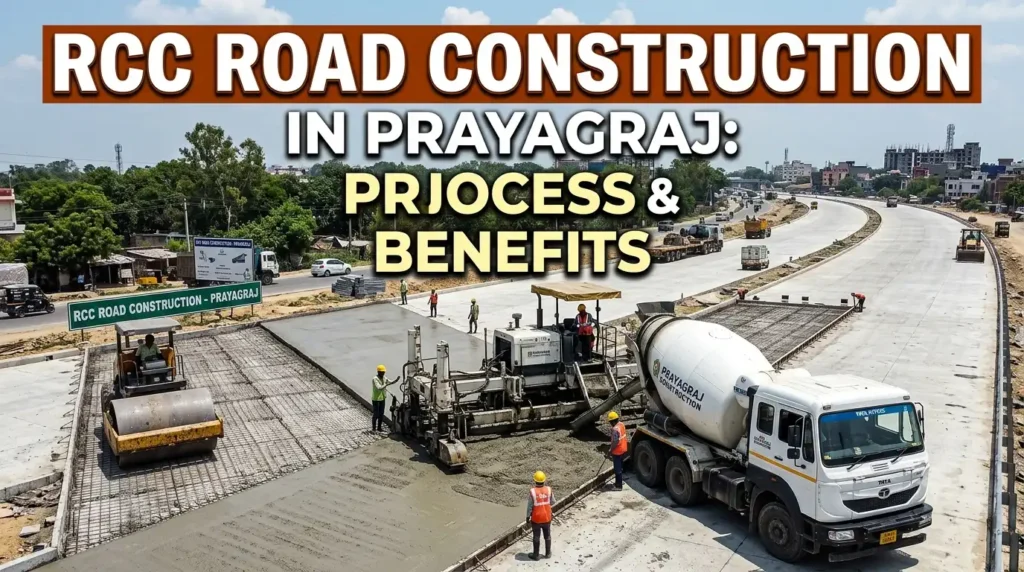
As Prayagraj continues to expand with new residential areas, commercial hubs, and industrial zones, the demand for durable and long lasting road infrastructure has grown significantly. Among the various road building methods available today, RCC Road Construction in Prayagraj has emerged as a preferred choice for high traffic areas, government projects, and locations that require minimal maintenance over the years.
In this blog, we take a closer look at what RCC road construction involves, its step by step process, and the benefits it offers over traditional road building methods.
What is RCC Road Construction
RCC stands for Reinforced Cement Concrete. Unlike asphalt roads, which use a bituminous surface layer, RCC roads are built using a mix of cement, aggregates, and steel reinforcement bars. This combination creates a rigid pavement structure capable of handling heavy loads, extreme weather conditions, and high volumes of traffic without frequent repairs.
RCC Road Construction in Prayagraj is commonly used for highways, industrial areas, bridges approaches, and busy urban roads where durability is a top priority.
The RCC Road Construction Process
Building a strong and durable RCC road involves several carefully planned stages:
- Site survey and soil testing: Engineers assess soil bearing capacity, drainage patterns, and traffic load requirements before finalizing the design.
- Sub grade preparation: The base soil is leveled, compacted, and treated to provide a stable foundation for the road structure.
- Sub base and base layer construction: A layer of granular material or wet mix macadam is laid to distribute the load evenly and improve stability.
- Reinforcement placement: Steel bars or wire mesh are positioned according to the structural design to enhance tensile strength.
- Concrete mixing and pouring: A precise mix of cement, sand, aggregate, and water is prepared and poured over the reinforced base.
- Compaction and finishing: The concrete is compacted using vibrators and finished with proper surface texturing for skid resistance.
- Curing: The road surface is kept moist for a specified period, usually several days, to allow the concrete to gain full strength.
- Joint sealing and quality inspection: Expansion joints are sealed, and the final surface is tested for thickness, strength, and smoothness before opening to traffic.
Key Benefits of RCC Road Construction
Choosing RCC Road Construction in Prayagraj offers several long term advantages for both government authorities and private developers:
- High durability: RCC roads can last 25 to 30 years with minimal maintenance, compared to 8 to 10 years for typical asphalt roads.
- Better load bearing capacity: Ideal for areas with heavy vehicle movement, such as industrial zones and highways.
- Lower maintenance costs: The rigid structure resists rutting, potholes, and surface deformation, reducing repair expenses over time.
- Weather resistance: RCC roads perform well in extreme heat and heavy monsoon conditions, both common in the Prayagraj region.
- Fuel efficiency for vehicles: The rigid surface reduces rolling resistance, which can improve fuel efficiency for heavy vehicles.
- Environmentally stable: Unlike asphalt, RCC roads do not soften in high temperatures or get damaged by fuel or oil spills.
- Long term cost effectiveness: While the initial construction cost is higher than asphalt, the extended lifespan and lower maintenance needs make RCC roads more economical over time.
Where RCC Roads Are Most Suitable
RCC construction is particularly beneficial in:
- High traffic city roads and intersections
- Industrial and logistics parks
- Bus stands, toll plazas, and parking areas
- Areas prone to waterlogging or heavy rainfall
- Roads near bridges, flyovers, and heavy load zones
Challenges to Consider
While RCC roads offer many advantages, there are a few factors to keep in mind:
- Higher initial construction cost compared to asphalt roads.
- Longer curing time before the road can be opened to traffic.
- Requires skilled labor and precise quality control during construction.
Working with an experienced contractor helps ensure these challenges are managed effectively, resulting in a road that delivers long term value.
Conclusion
RCC Road Construction in Prayagraj offers a durable, low maintenance, and cost effective solution for roads that need to withstand heavy traffic and challenging weather conditions. While the upfront investment is higher than traditional asphalt roads, the long term savings in maintenance and the extended service life make it a smart choice for government and private infrastructure projects alike.
If you are planning an RCC road project in Prayagraj, our experienced team can guide you through the entire process, from site assessment to final handover, ensuring quality and durability at every stage. Contact us to discuss your project requirements.