
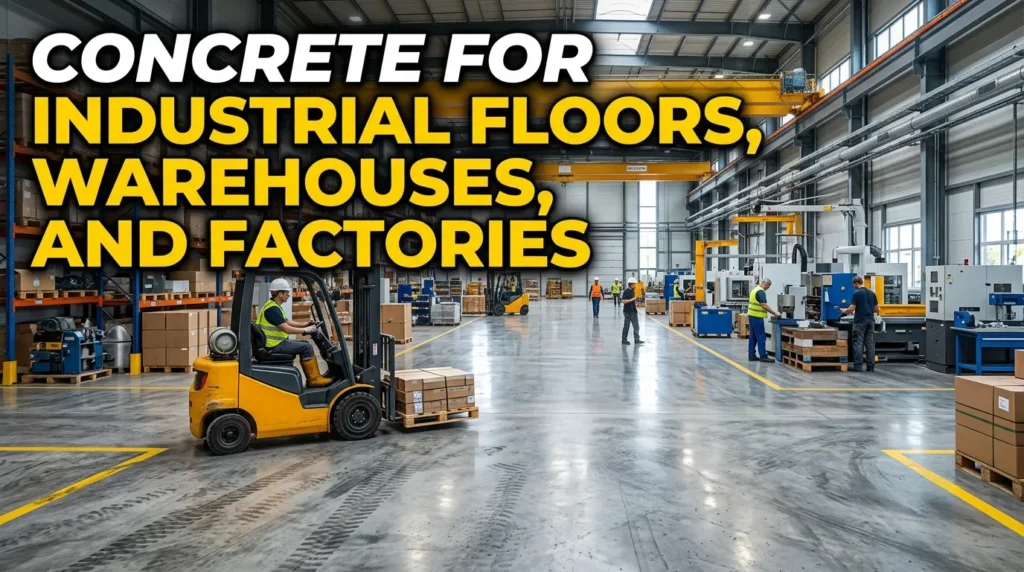
Industrial facilities demand flooring that can withstand relentless daily pressure, from heavy machinery and forklift traffic to chemical spills and constant foot traffic. Among all flooring options available today, concrete for industrial floors remains the top choice for warehouses, factories, and manufacturing plants due to its durability, cost effectiveness, and long term performance.
Why Concrete Is the Preferred Choice
Concrete has been used in industrial construction for decades, and for good reason. Unlike softer flooring materials, it can bear extreme loads without cracking or warping under normal conditions. Facility owners choose concrete for industrial floors because it delivers a combination of strength, longevity, and low maintenance that few alternatives can match.
Some of the key advantages include:
- High load bearing capacity for heavy equipment, pallet racking, and vehicle traffic
- Resistance to chemicals, oils, and moisture, which is critical in manufacturing environments
- Long service life, often exceeding 20 to 30 years with proper maintenance
- Low ongoing maintenance costs compared to tile, epoxy only, or wood flooring systems
- Customizable finishes, including polished, sealed, or coated surfaces for added protection
Types of Industrial Concrete Flooring
Not all industrial concrete floors are built the same way. Depending on the facility’s function, different finishing techniques are applied to enhance performance.
- Polished concrete offers a smooth, reflective surface that reduces dust and improves lighting efficiency within warehouses.
- Sealed concrete adds a protective layer that resists staining and moisture penetration.
- Coated or epoxy topped concrete provides an extra layer of chemical and abrasion resistance for factories handling industrial materials.
- Fiber reinforced concrete improves crack resistance in high traffic zones and areas exposed to heavy impact.
Choosing the right type depends on factors such as expected foot and vehicle traffic, exposure to chemicals, temperature fluctuations, and the specific operational needs of the facility.
Key Considerations Before Installation
Before pouring concrete for industrial floors, several factors must be evaluated to ensure long term performance:
- Subgrade preparation: A properly compacted and leveled subgrade prevents future settling or cracking.
- Slab thickness: Industrial floors typically require thicker slabs than residential or commercial applications to support heavy loads.
- Joint placement: Strategic control joints reduce the risk of random cracking as the concrete cures and settles.
- Curing process: Adequate curing time ensures the concrete reaches its full strength potential before heavy use begins.
- Surface finishing: The right finish improves slip resistance, cleanliness, and overall durability based on the facility’s daily operations.
Working with experienced contractors who understand industrial applications is essential, since improper installation can lead to costly repairs and operational downtime.
Maintenance Tips for Long Term Performance
Even the most durable concrete floor requires proper care to maximize its lifespan. Facility managers should implement:
- Regular cleaning schedules to prevent chemical buildup and staining
- Periodic inspections for cracks, joint damage, or surface wear
- Prompt repair of minor damage before it expands into larger structural issues
- Reapplication of sealants or coatings as recommended by manufacturers
Conclusion
For warehouses and factories that operate under demanding conditions, concrete for industrial floors continues to be the most reliable flooring solution available. Its strength, versatility, and adaptability to various finishing options make it suitable for nearly every type of industrial operation. By investing in proper installation and consistent maintenance, facility owners can ensure their floors remain functional, safe, and cost effective for decades to come.
Whether building a new facility or upgrading an existing space, choosing the right concrete flooring solution is a decision that directly impacts operational efficiency and long term profitability.