
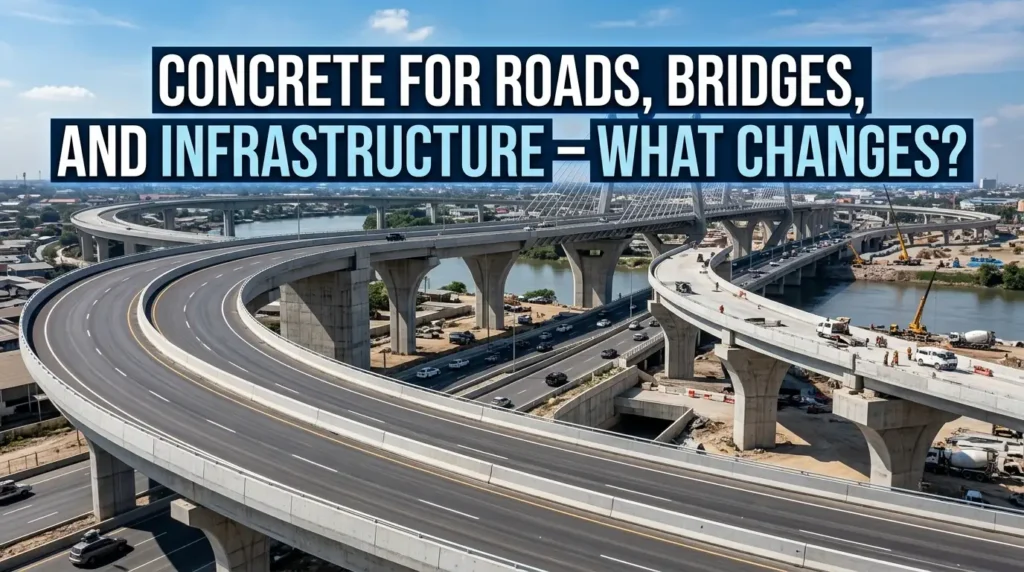
Concrete is one of the most versatile building materials in the world, but not all concrete is created equal. The mix used to pour a home’s driveway is very different from the one used to build a six lane highway or a river crossing bridge. When it comes to concrete for infrastructure, engineers must account for heavier loads, constant weather exposure, and decades of expected service life. Understanding these differences helps explain why infrastructure projects demand specialized concrete formulations, testing, and construction techniques.
Why Infrastructure Concrete Is Different
Ordinary structural concrete is designed primarily for compressive strength and durability under controlled conditions. Infrastructure concrete, on the other hand, has to endure a much harsher set of demands. Roads and bridges are exposed to constant traffic loads, temperature swings, moisture, chemical deicers, and in many cases, saltwater or industrial pollutants. This means the concrete mix design has to be adjusted to resist cracking, scaling, and long term degradation.
Some of the key factors that change when concrete is used for concrete for infrastructure applications include:
- Higher compressive and flexural strength requirements to handle repeated heavy loads from vehicles and equipment
- Increased durability standards to resist freeze thaw cycles, especially in colder climates
- Low permeability mixes that reduce water and chloride penetration, which helps prevent corrosion of embedded steel reinforcement
- Air entrainment additives that create tiny air bubbles in the concrete, improving resistance to freeze thaw damage
- Reinforcement design changes, including the use of rebar, dowel bars, or post tensioning systems for bridges
Special Considerations for Roads
Road construction typically uses either rigid pavement (concrete) or flexible pavement (asphalt), and when concrete is chosen, the mix must be engineered for joint spacing, load transfer, and surface texture. Proper joint design prevents random cracking as the concrete expands and contracts with temperature changes. Surface texturing, such as tinting or grooving, is also critical for skid resistance and driver safety.
Special Considerations for Bridges
Bridges introduce additional engineering challenges because the concrete often has to span longer distances and support dynamic loads from moving traffic. This is why bridge decks frequently use:
- High performance concrete with silica fume or fly ash to boost strength and reduce permeability
- Epoxy coated or stainless steel rebar to fight corrosion, particularly in coastal or high salt environments
- Precast concrete elements, which allow for better quality control and faster on site assembly
- Waterproofing membranes and protective overlays to extend service life
The Role of Testing and Quality Control
Because infrastructure failures can have serious safety and financial consequences, testing standards for concrete for infrastructure are far more rigorous than typical residential or commercial work. Contractors routinely perform slump tests, compressive strength tests, and air content tests at the job site, along with long term monitoring once the structure is in service. Many public projects also require third party inspection to verify that the mix design and placement methods meet government specifications.
Sustainability and Long Term Performance
Modern infrastructure projects increasingly focus on sustainability, using supplementary cementitious materials like fly ash and slag to reduce the carbon footprint of concrete while also improving durability. Life cycle cost analysis is now a standard part of planning, since a slightly more expensive mix that lasts fifty years can be far more economical than a cheaper option that requires repair after fifteen.
Conclusion
Building roads, bridges, and other infrastructure requires far more than pouring standard concrete and waiting for it to cure. Engineers must balance strength, durability, cost, and environmental exposure to create structures that can safely serve the public for generations. As materials science continues to advance, concrete for infrastructure will keep evolving, offering longer lifespans, lower maintenance costs, and a smaller environmental impact.