
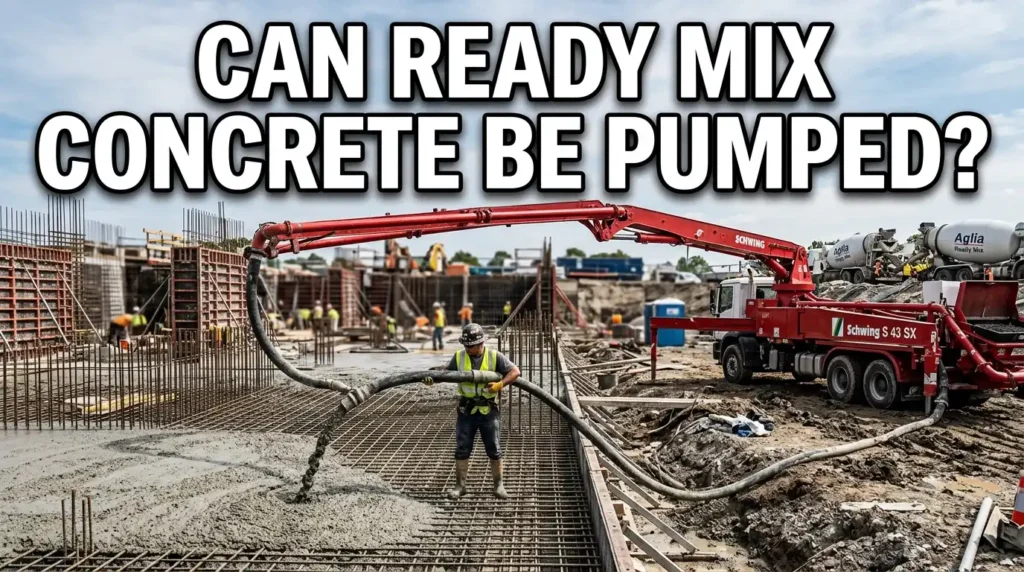
Yes, ready mix concrete can be pumped, and it is one of the most common ways to place concrete on modern building sites. Whether you are building a house foundation, a multi-storey slab, or a driveway behind a narrow gate, pumping delivers concrete exactly where you need it. This guide explains how the process works, what makes a mix pumpable, and when to hire professional ready mix concrete pumping services.
How Does Concrete Pumping Work?
Ready mix concrete arrives on site in a transit mixer truck. Instead of pouring directly from the chute, the driver discharges the concrete into the hopper of a pump. The pump then pushes the concrete through a pipeline or boom to the placement area.
There are two main types of pump:
- Boom pump: A robotic arm mounted on a truck that reaches high or distant areas, ideal for slabs, columns, and high-rise work.
- Line pump: A trailer-mounted unit with flexible hoses, better for small jobs, basements, driveways, and tight spaces.
What Makes Ready Mix Concrete Pumpable?
Not every mix flows well through a pipe. Pumpable concrete needs a balance of workability and cohesion, so it moves easily without separating. These are the key factors:
- Slump: Most pumpable mixes have a slump between 80 mm and 150 mm. A mix that is too stiff blocks the line, and one that is too wet segregates.
- Aggregate size: The largest aggregate should generally be no more than one third of the pipe diameter. Most line pumps work best with 10 mm to 20 mm aggregate.
- Fine content: Enough sand and cement paste is needed to lubricate the pipeline and carry the coarse aggregate.
- Admixtures: Plasticizers and superplasticizers improve flow without adding extra water, which protects strength.
- Water-cement ratio: A controlled ratio keeps the mix strong and stable under pressure.
Because ready mix plants batch concrete under controlled conditions, they can supply a pump-grade mix with consistent quality. This is a big advantage over mixing on site.
Benefits of Pumping Ready Mix Concrete
Pumping offers several practical advantages over wheelbarrows, cranes, or direct chute pours:
- Speed: A pump can place a large volume of concrete per hour, shortening the pour time and reducing the risk of cold joints.
- Access: It reaches rooftops, basements, backyards, and sites where trucks cannot drive close.
- Lower labor costs: Fewer workers are needed to move concrete, so the crew can focus on finishing.
- Better quality: Continuous placement reduces segregation and gives a more uniform result.
- Less site disruption: Pumping keeps walkways, gardens, and finished areas clear of heavy traffic.
Common Problems and How to Avoid Them
Pumping is reliable when planned properly, but a few issues can cause trouble.
Blockages are the most common. They usually come from a mix that is too dry, oversized aggregate, or long delays between loads. Ordering the correct mix and keeping deliveries steady prevents most of them.
Segregation happens when water or paste separates from the aggregate. Using a well-designed mix with suitable admixtures reduces this risk.
Poor priming can also stall a pour. Before concrete is pumped, the line is lubricated with a cement slurry or grout. Skipping this step makes blockages far more likely.
Finally, never add extra water on site to make the mix flow better. It weakens the concrete and can ruin the batch.
When Should You Hire Ready Mix Concrete Pumping Services?
Professional ready mix concrete pumping services are worth considering when:
- The pour area is far from where the truck can park.
- You are pouring above or below ground level.
- The job involves a large volume of concrete that must be placed quickly.
- Access is limited by fences, buildings, or landscaping.
- You want a consistent finish on a slab, deck, or foundation.
An experienced operator will assess the site, recommend the right pump size, and coordinate with the ready mix supplier so the mix and the equipment match.
How Much Does Concrete Pumping Cost?
Pricing depends on pump type, hire duration, volume, and distance. Most providers charge a call-out fee plus an hourly or per cubic metre rate. A boom pump costs more than a line pump, but the time and labor you save often offset the difference on larger projects. Always ask for a written quote that lists minimum hours, setup charges, and washout fees.
Concrete
So, can ready mix concrete be pumped? Absolutely. With the right slump, aggregate size, and admixtures, ready mix concrete flows smoothly through pump lines and delivers faster, cleaner, and more consistent results. For most medium to large projects, hiring reliable ready mix concrete pumping services is a smart investment that saves time, reduces effort, and protects the quality of your build.